


No more bad hay days.
Forage is imperfect, but digestion doesn’t have to be. Support increased nutrient absorption and a steady appetite through every “why did I buy this” bale.
Couldn't load pickup availability
Support smooth digestion and better condition

Hay Fix™ is a pelleted supplement designed to support digestive health, especially for horses on lower-quality forage, frequent feed changes, or with constant “hay belly.” Its targeted blend of prebiotics, probiotics, postbiotics, and digestive enzymes helps maintain proper gut flora, assist in nutrient digestion, and support overall condition from the inside out.
How Hay Fix™ may help your horse:
*Formerly known as Stride Transform DSI
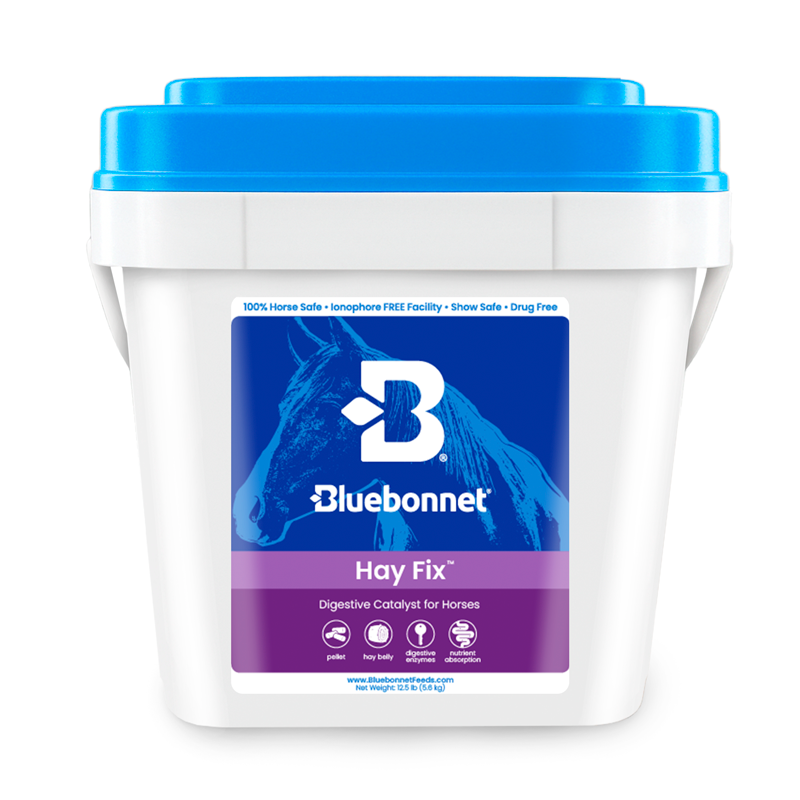


No more bad hay days.
Forage is imperfect, but digestion doesn’t have to be. Support increased nutrient absorption and a steady appetite through every “why did I buy this” bale.
Sometimes, the hay you bought turns out to be…not so great. Hay Fix can save the day. Unique enzymes and their ‘biotic buddies help pull extra nutrition from forage, shrink bloated hay bellies, and make every bale work harder while you await a new load.
What happens when you combine strategically selected pre-, pro-, postbiotics, AND digestive enzymes? Your horse’s feed efficiency increases up to 30%*, allowing them to pull more nutrients out of the feed and forage you provide.
Horses come first - always. Bluebonnet® is proud to be an ionophore-FREE mill. We prioritize the safety of your horses above all else, ensuring that no ionophores are allowed on our property.
Listen While You Work
A horse with a hay belly is most commonly described as a horse that looks pregnant, bloated and distended. Their belly is likely sticking out on the sides and may even appear to be hanging lower than normal. If you’ve been joking about when your gelding is “due” - he might have a hay belly. It is often, but not always, accompanied by a poor top-line.
This isn’t something that happens overnight. It develops over time usually as a result of lower quality forage, but can ALSO be attributed to lack of exercise, reduced fitness, and excessive eating. This means it IS possible to be feeding very high quality forage and still have a horse that has a hay belly. (It’s also important to remember that underweight or undernourished horses can have a hay belly, convincing the untrained eye a horse is in good condition.)
Forage is the foundation of every horses’ diet. But it’s important to know the quality of what you’re feeding.
Looks can be deceiving. That’s why we always recommend testing your hay to make sure your horse is getting enough calories, understand macro and micro-nutrient composition, and ensure your hay is high in digestible fiber. We recommend using Equi-Analytical as their results are reported in a practical way that is straightforward for the equine industry.
Be sure to check out Feed Room Chemist: Episode #51 - Dirty Truth About Hay + Reading Forage Analyses.
Hay analysis can feel overwhelming, but once you understand a few key values, it gets much easier.
One of the first things we check is crude protein. Many hay tests come back on the lower side, often under 10%. But even more important is the NDF (neutral detergent fiber) value. When NDF creeps up around 60% or higher, that’s when we start waving a red flag.
Why? Because a high NDF usually means the hay was harvested too mature. As hay plants age, they develop more lignin - the tough, indigestible component of the plant. Lignin is indigestible to the horse, and the more lignin present, the harder it is for the gut microbes to break down the fiber.
Most people don’t discover this until after they’ve already bought several months worth of hay. If that’s the case, don’t panic - you just have to help the hindgut work smarter, not harder. That’s where a digestive catalyst like Hay Fix can make a big difference, supporting the microbes as they break down that tougher fiber more efficiently.
We could write all day about hay hay tests but Dr. Jyme does a better job talking about it in out in Feed Room Chemist: Episode #51 - Dirty Truth About Hay + Reading Forage Analyses.
While there are some similarities, we think this chart can break it down:
(swipe on mobile to see more)
| Hay Fix™ | Gut Reset™ | |
|
Form |
Pellet |
Powder (or paste) |
|
Pre/Pro/Post-biotics |
Guaranteed |
MEGA Dose Guaranteed |
|
Enzymes |
Guaranteed |
|
|
Digestive Target |
Hind Gut |
Hind Gut |
|
Choose This For: |
|
|
Be sure to check out Feed Room Chemist: Episode #61 - Choosing A Gut Supplement.
Hay Fix™ delivers a combination of prebiotics, probiotics, postbiotics, and powerful digestive enzymes in a convenient pelleted form. These technologies work throughout the gastrointestinal tract to support a balanced microbiome and a more efficient breakdown of forage and concentrate feeds.
Because horses do not naturally produce every enzyme required to fully utilize modern rations or inconsistent forage, Hay Fix™ includes specialized enzymes. They include alpha-Amylase for starch digestion, Protease for protein breakdown, Cellulase for fiber deconstruction, and beta-Glucanase to help process cereal grains like oats, corn, and barley. Together, these components help turn complex feed particles into usable nutrition, supporting healthy appetite, improved nutrient absorption, and steady digestive comfort.
Here’s what the most compelling research says Hay Fix™ can do. 👇
Adding certain yeast cultures to the diet increases nitrogen retention in the hind gut and promotes tissue production. This nourishment of microbes in the hind gut encourages more complete breakdown of feed. Improved breakdown of feed increases the amount of nutrients available for absorption, and therefore allows the horse to reach a higher nutritional plane. Digestive support supplements improve feed efficiency which leads to weight gain and better body condition.
A four-week third-party research trial was performed on the proprietary combination of ingredients used in Hay Fix. The data revealed that the unique blend improved the digestion rate of dry matter, fiber, starch,protein, and fat (oil) when compared to a placebo.
Additionally, horses that consumed the proprietary ingredients found in Hay Fix had significantly higher feed efficiency scores (*31.7% better than horses that were fed a placebo); and had higher average daily weight gains (0.72 lbs/day more than horses fed a placebo) which supports the idea that more nutrients were being absorbed from the same amount of feed.
The body’s first line of defense, secretory immunoglobulin A (sIgA) levels, are increased by feeding certain yeast cultures. These antibodies are in the eyes, mouth, nose and other mucus membranes throughout the body to help trap pathogens before they cause harm.
A second line of defense is increased NK cell activity. NK cells are lymphocytes, a type of white blood cell, that are fast and effective at seeking out and destroying stressed and abnormal cells in the body. NK stands for “natural killer” because they don’t need assistance to differentiate “good” cells from “bad” cells. This allows a much quicker response time to keep the body healthy.
In addition, antioxidants circulate in the body and help protect cells from oxidative damage. Oxidative stress may affect how the immune system works over time. Certain yeast cultures contain high levels of antioxidants which have the ability to gain access to live cells and provide protection from oxidation.
Travel, even at short distances, can have a negative impact on a horse’s appetite. Travel-related stress causes a change in the bacterial community in the hind gut of a horse. Supplementing with a probiotic has been shown to help alleviate some of these stress-induced changes. Improving the gastrointestinal environment and reducing the negative effects of travel-related stress may improve a horse’s willingness to eat away from home.
Bacteria in the gut play an important role in bidirectional communication of the gut-brain axis. Researchers suggest certain organisms are helpful for regulating anxiety and depression in animals.
The brain is a major consumer of oxygen, therefore it is a target for oxidation by reactive oxygen species. Peroxidation of nerve endings alters neurotransmitter transport which affects central nervous system function. Supplementation of a unique yeast culture with high radical absorbance capacity may benefit mental health and stability in horses.
Horses supplemented with live yeast have reduced lactate levels and lower heart rates after exercise. Researchers believe this is due to an improvement in nitrogen balance resulting in increased muscle mass and metabolic efficiency, and therefore increasing oxygen carrying capacity within the cardiovascular system.
Research shows supplementing with a unique strain of yeast reduces the variation of intestinal pH and lowers lactic acid. These reductions make the horse more tolerant to starch in feed rations.
Here are just a few of our favorites: