


Legally, we can't tell you LIFELINE®+ Equine can do it all...but it sure comes close.
Support for the gut, lungs, immune system & more - all in a small pellet.
Couldn't load pickup availability
Plasma-powered support for whole-body wellness

LIFELINE®+ Equine is the unicorn of equine supplements. It is formulated with bioactive proteins including peptides and immunoglobulins, plus a digestive aid to support your horse’s entire system. By working through the mucosa-associated lymphoid tissue (MALT), LIFELINE®+ Equine helps maintain wellness from gut to lungs to joints and beyond.
Backed by 600+ peer-reviewed studies, here's how the plasma in LIFELINE®+ Equine supports your horse:
*Formerly known as Stride LIFELINE®+ Equine
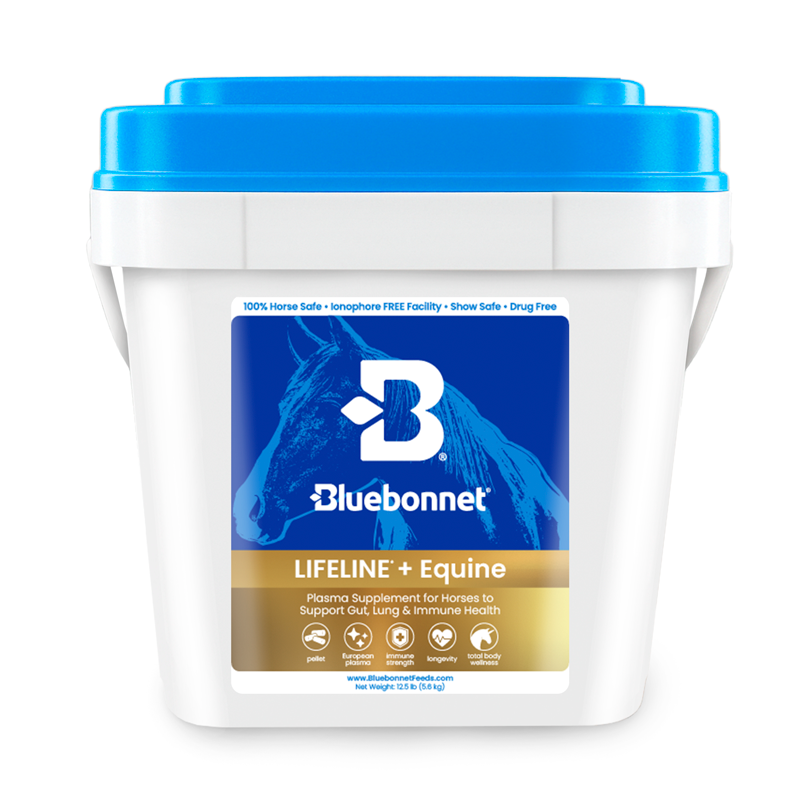
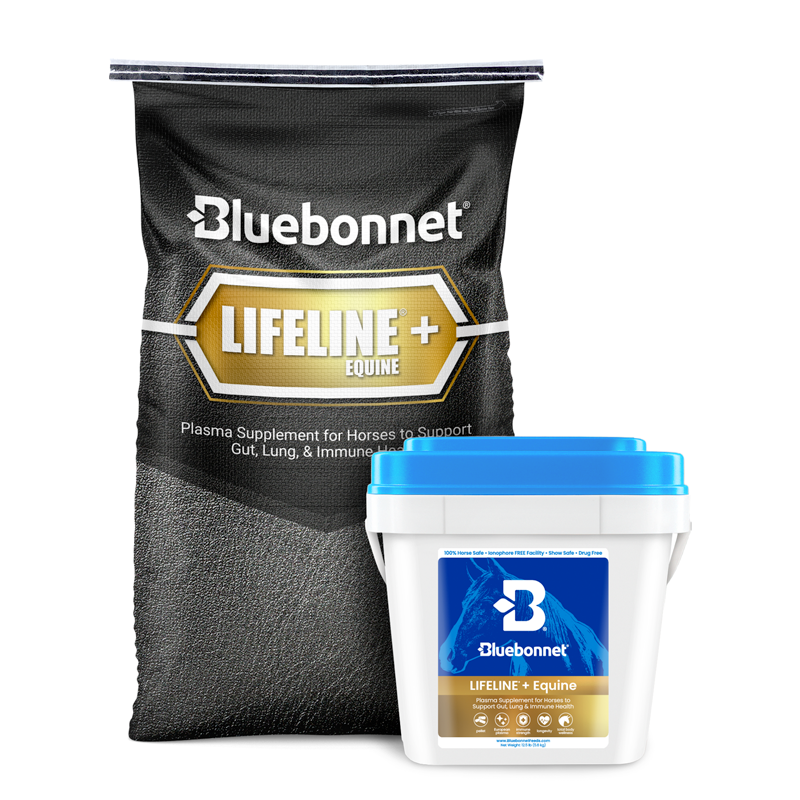


Legally, we can't tell you LIFELINE®+ Equine can do it all...but it sure comes close.
Support for the gut, lungs, immune system & more - all in a small pellet.
Listen On The Go
Absolutely! The safety of plasma is directly linked to the source, screening procedures, and handling practices during manufacturing. Our team of experts strategically sources plasma only from Europe. European-sourced plasma is produced under strict regulations and safety standards to eliminate risks of contamination.
These stringent processes ensure that the plasma used in LIFELINE®+ Equine is high quality and safe for equine consumption. These safety measures also ensure that there is no risk of ractopamine or ionophore contamination, which could pose a danger to the horse's health.
It all starts with clean plasma, sourced from animals raised in Europe, followed by stringent filtration, purification, concentration, and sterilization techniques.
Read more about Bluebonnet's safety standards here, or listen to Feed Room Chemist Episode #10.
Most organizations allow the supplementation of feed-through plasma to competition horses, but we always recommend checking with the governing body of your specific organization or event to confirm any regulations or guidelines.
Don’t stress. We choose plasma from strictly-regulated European sources so you can be confident there will be no risk of trace levels of banned substances that could trigger a positive drug test.
The Intensify® feeds (and Equilene® Pro Care) are formulated to provide a steady supply of LIFELINE®+ Equine, over a longer period. Deciding to increase the amount in your horse’s diet through supplementation depends on their unique needs and your desired goals.
Feeding a smaller, consistent amount of plasma over a longer period can help maintain a steady level of bioactive proteins in your horse's system. This can benefit long-term wellness and support improved immune function, digestive health, soft tissue development, and healthy aging.
We recommend supplementing LIFELINE®+ Equine when horses need faster or more targeted support. Supplementing is a great choice for horses recovering from illness, injury, or ulcers. LIFELINE®+ Equine can also support performance goals when supplemented, from stride length to joint health and even respiratory function.
LIFELINE®+ Equine delivers serum-derived biologically active proteins, aka plasma, plus a unique fermentable fiber, to horses in a convenient pellet form. These bioactive proteins are effective in multiple areas of the body through the common mucosal immune system after ingestion. Bioactive proteins work together to support the gut, lungs, reproductive tract, & immune system of horses by providing peptides, immunoglobulins (IgA, IgG, & IgM), albumin & growth factors.
The research is abundant, but here is what we find most exciting! 👇
Approximately 70% of the immune system resides in the digestive tract of the horse. A key function of the intestinal lining is to serve as a selective barrier allowing uptake of nutrients while excluding toxins and harmful microorganisms. The intestinal lining is not completely impermeable to components in the digestive tract. Therefore, it depends on the capacity of tight junctions to efficiently seal the apical poles of epithelial cells. The space between cells contains interlocking proteins called claudins. These proteins are essential for a proper seal of tight junctions. Dietary bioactive proteins are capable of reducing intestinal permeability, thus preventing toxins from penetrating the tight junctions.
Since gut-associated lymphoid tissue (GALT) is an inductive site that connects both local and peripheral sites (i.e. respiratory tract, glandular tissues and uterine mucosa), it can be further hypothesized that bioactive proteins from plasma will reduce overstimulation of the broader common mucosal immune system.
The digestive tract is one of the first lines of defense against pathogenic organisms. Maintaining a healthy digestive tract enhances nutrient absorption, energy metabolism, immune response, and reduces susceptibility to mycotoxins which lowers incidences of diarrhea. LIFELINE®+ Equine contains a unique fermentable fiber that acts as a stimulant to the beneficial microorganisms residing in the digestive tract, and thus has prebiotic properties.
The intestinal tract does much more than just absorb nutrients. Researchers describe the gastrointestinal tract as an ecosystem, and suggest that fermentable fiber in the diet can be used as a “management tool” to affect the resident microbiological population. Fermentable fiber is capable of reducing pathogenic organisms that occur during diarrhea. In addition, fermentable fiber increases the production of postbiotic metabolites (such as acetate, propionate, and butyrate) while also reducing growth of pathogenic organisms.
The digestive tract is a complex, highly organized system, and maintaining the health of the digestive tract has a direct impact on the whole animal. The unique fermentable fiber in LIFELINE®+ Equine has been shown to stimulate growth rate and enzyme activity of the naturally occurring, beneficial microorganisms in the digestive tract, and also increase the short-chain fatty acid production by those microorganisms. Therefore, LIFELINE®+ Equine is a tool to help horses fend off pathogens and maintain a fully functioning digestive tract.
The addition of bioactive proteins to the diet has been shown to promote healing of gastric ulcers in monogastric species. Horses experiencing stress from exercise or training programs are prone to developing gastric ulcers. Feeding a horse bioactive proteins derived from serum/plasma is an effective, drug-free method for preventing ulcers.
In a recent study, horses not receiving bioactive proteins were twice as likely to develop gastric ulcers compared to horses that did receive bioactive proteins fed orally at 80g/day. Furthermore, increasing the dosage of bioactive proteins to 210g/day significantly (P=0.0001) reduced formation of squamous gastric ulcers in stressed horses.
The exposure of squamous mucosa to hydrochloric, valeric, and other volatile fatty acids initiates cellular damage, cellular swelling, and barrier disruption in the non-glandular portion of the stomach. The prevention of ulcer development in horses fed bioactive proteins is likely the result of less inflammation within the gastric mucosa as seen in other species.
Dietary supplementation of bioactive proteins can trigger a reduction in inflammatory mediators responsible for acute lung injury. Lower levels of pro-inflammatory cytokines may be especially helpful in horses with chronic airway conditions such as allergies, recurrent airway obstruction (heaves) or exercise induced pulmonary hemorrhage (bleeding). The mechanism of action involves a reduction in the pro-inflammatory to anti-inflammatory cytokine ratios in both Peyer’s patches and the mucosa..
Research shows dietary bioactive proteins reduce inflammatory immune responses of females after breeding. This contributes to a sharp increase in pregnancy rate. Furthermore, by reducing overstimulation of the immune response, more of the available energy and nutrients can be used for growth and other reproductive functions, rather than being diverted to support the immune response. Bioactive proteins may also improve the chance of establishing pregnancy by helping reduce inflammation in the uterine mucosa.
Researchers found that feeding biologically active proteins on a daily basis improved gait kinematics in horses. Improvements were found in stride length and range of motion in the hocks.
The mode of action is not yet clearly understood, but researchers believe serum-derived proteins help ease soreness from daily exercise.
Graph - A 2014 clinical study has shown that LIFELINE® + Equine improved stride length and enhanced knee range of motion in stressed horses as measured by gait kinematics, which analyzes how horses move, walk and run by measuring joint movement.
Here are just a few of our favorites: