


Daily defense against gastric stress.
Helps horses handle the everyday stress of training, travel, and competition.
Couldn't load pickup availability
Help soothe and support your horse’s stomach

Gastro pHix™ is a pelleted gastric buffer formulated to help maintain normal stomach pH and support the protective lining of the foregut and small intestine. It is ideal during times of stress, such as travel, training, or dietary changes, and includes natural ingredients to promote digestive comfort and health. Formulated with research-backed ingredients in guaranteed amounts, so you can trust your horse is getting effective, consistent support.


How Gastro pHix™ may help support your horse:
*Formerly known as Stride Gastro pHix™
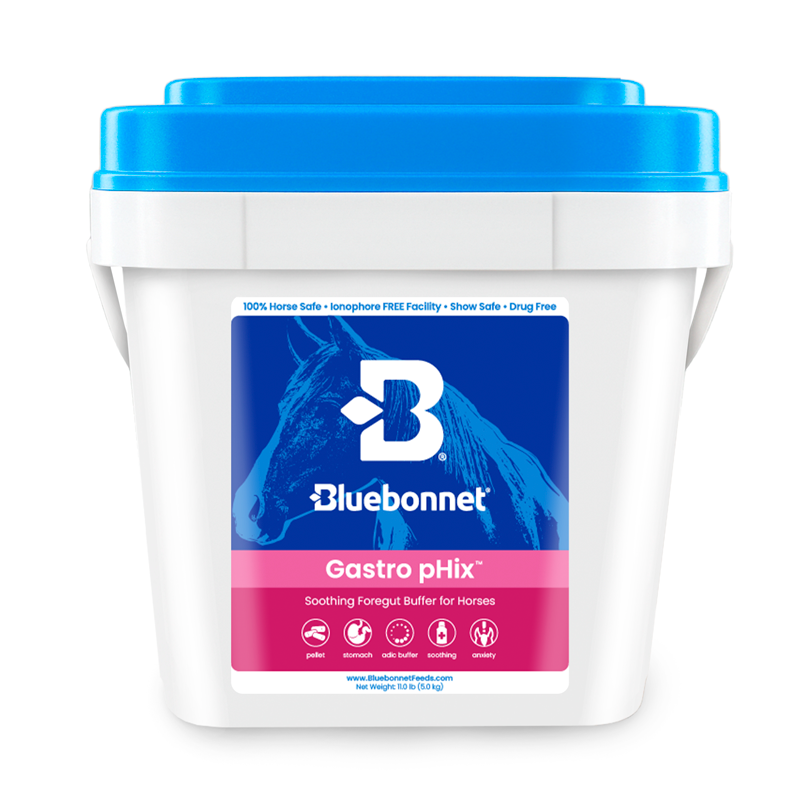

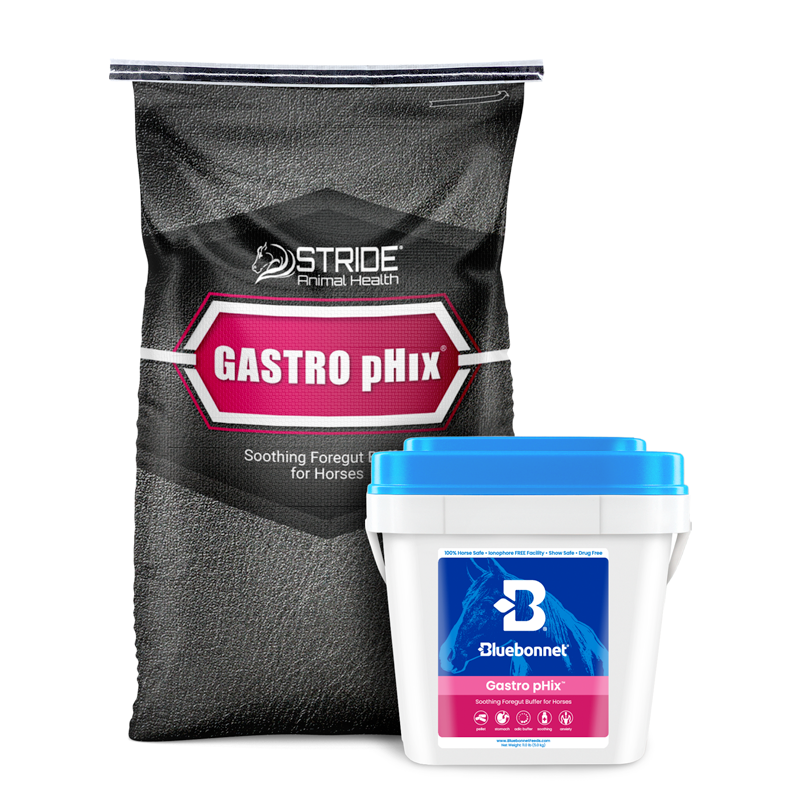



Daily defense against gastric stress.
Helps horses handle the everyday stress of training, travel, and competition.
The gut is often called the body's "second brain,"and for good reason. By supporting digestive health, gut integrity, and microbe-friendly pH levels, Gastro pHix™ helps support the systems that influence behavior, immunity, and everyday well-being.
Featuring ButiPEARL Z EQ®, Gastro pHix™ helps support the delicate gut lining, protection, regeneration, and repair. A stronger gut barrier helps your horse maintain digestive health and get more from their feed when daily stress takes its toll.
Listen On The Go
Gastro pHix doesn’t rely on just one active ingredient, it combines a PhD-selected blend proven to soothe, protect, and promote the health of the entire foregut.
Take a look at how Gastro pHix™ stacks up next to popular gastric supplements:
| Bluebonnet® Gastro pHix™ | Purina® Outlast® | 100X Equine GutX | |
|
Gastric Supporting Ingredients |
|
|
|
|
Does the company guarantee levels of active ingredients on the tag? |
YES |
NO |
YES |
|
Form |
PELLET |
PELLET |
LIQUID |
Horses are designed to graze for most of the day, producing stomach acid around the clock. In fact, the average horse produces about 1.5 liters of gastric fluid every hour, totaling roughly 9 gallons per day. This constant acid production is normal, but it is meant to be buffered by near-continuous access to forage.
A horse’s stomach has two main regions:
The non-glandular (squamous) region, which has limited natural protection against acid
The glandular region, which is designed to secrete acid and has protective mechanisms in place
Ulcers most commonly develop in the non-glandular region when acid exposure increases or protective buffering from saliva and forage decreases.When normal eating patterns are disrupted, the stomach's natural protective balance can be challenged.
Common risk factors associated with gastric ulcers include:
Feeding management: long periods between meals, limited access to hay or pasture, reduced chewing time and saliva production, and high-starch concentrate feeding
Stress: transportation, competition, training, weaning, herd dynamics, and environmental changes
Health challenges: illness, injury, prolonged medication, and recovery from physical stress
During exercise, movement of gastric fluid can increase exposure of the non-glandular region to acid, sometimes referred to in simple terms as “acid splash.” For this reason, we recommend a handful of Gastro pHix™ before every ride in high-stress horses to buffer and protect.
The signs associated with gastric ulcers can vary from horse to horse and may overlap with other health or management issues. Some horses show obvious signs, while others may exhibit only subtle changes in behavior or performance.
Potential signs may include:
Because these signs can be associated with many different conditions, only a veterinarian can diagnose gastric ulcers. If you suspect your horse may have ulcers, consult your veterinarian for an appropriate examination and treatment plan.
Gastric ulcers occur when the protective lining of the foregut (stomach & small intestine) becomes compromised, allowing stomach acid to irritate sensitive tissues. In horses, this most commonly affects the squamous portion of the stomach, where there is limited natural protection against acid exposure. When this protective barrier is weakened, gastric ulcers, discomfort and reduced gastric integrity can occur.
The only FDA-approved treatments for gastric ulcers in horses are prescription medications issued by a veterinarian. Gastro pHix™ is formulated to support the normal structure and function of the foregut, including the stomach and upper small intestine, where this protective balance is especially important.
Lithothamnion (seaweed-derived calcium) helps buffer excess gastric acid to support a more stable gastric environment and reduce acid-related stress on sensitive stomach tissues. ButiPEARL Z EQ® supports intestinal epithelial cell health, including protection, regeneration, and repair of the gut lining that extends through the proximal digestive tract. Gastro pHix™ helps support the integrity and function of intestinal cells and nutrient absorption, which are essential to maintaining a healthy digestive barrier.
Together, these targeted ingredients help maintain the normal health and resilience of the gastric and intestinal lining in horses exposed to common stressors such as training, travel, competition, and routine changes.
Gastro pHix™ is typically given as part of a daily digestive support routine, especially for horses that experience regular stress from training, hauling, competition, stall confinement, or changes in environment and feeding schedules.
Many owners also use a handful of Gastro pHix™ as a “pre-ride belly buffer” when they want to support a more comfortable stomach environment before work, especially in horses that are sensitive to exercise, hauling, or routine changes.
Gastro pHix™ may be especially helpful during:
Heavy training or competition schedules
Travel or hauling days
Changes in feed, hay, or management
Weaning
As always, if a horse is showing signs of significant digestive discomfort or suspected gastric ulcers, it is important to consult a veterinarian for diagnosis and treatment. Gastro pHix™ can then be used as part of a broader nutritional program to support ongoing digestive health.
Omeprazole, esomeprazole, misoprostol and sucralfate are prescription medications used to treat gastric ulcers, and any use alongside supplements should always be guided by your veterinarian.
As a general management practice, if your horse is receiving oral medications, it is commonly recommended to separate administration times. This helps ensure proper use of the medication according to its intended absorption and activity.
Gastro pHix™ does not contain soy. Its inactive ingredients include alfalfa meal, anise seed, and rice bran.
As always, if your horse has specific sensitivities or dietary restrictions, we recommend reviewing the full ingredient panel and consulting with your veterinarian and equine nutritionist to ensure the product is appropriate for your individual horse.
Yes, Gastro pHix™ is a drug-free formula and is show-safe. Read more about Bluebonnet's ionophore stance and safety standards here, or listen to Feed Room Chemist Episode #10.